Hello Belly: A Warm, Handwritten Font for Handmade Creators
It’s 9 a.m. on a quiet Tuesday — coffee steaming, Cricut mat prepped, and a fresh batch of soy wax candles cooling on the shelf. I’m finalizing labels for my “Honey & Lavender” scent, and something feels off. The current font looks crisp and clean, yes — but it doesn’t whisper “hand-poured,” “small-batch,” or “made with care.” That’s when I opened Hello Belly.
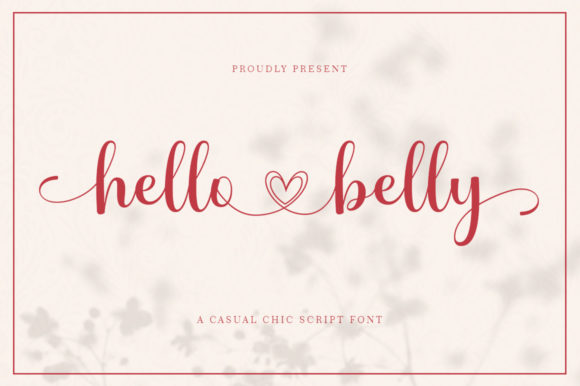
From the first keystroke, Hello Belly felt like slipping into a favorite apron — familiar, soft, and full of quiet intention. It’s a sweet, all-round handwritten font — not overly fussy, never stiff, and beautifully flexible. Warm, romantic, and jolly all at once, Hello Belly carries that gentle confidence handmade makers want to project: approachable but intentional, personal but polished.
I started small: typing “Honey & Lavender” across a mockup label. Instantly, the product felt more cohesive — like the scent, the jar, and the text were part of the same story. That’s the magic of a well-chosen script font. Hello Belly isn’t just decoration; it’s a subtle bridge between your craft and the person holding it.
As a maker who designs candle labels, greeting cards, wedding welcome boards, printable wall art, and seasonal digital downloads, I rely on fonts that work *with* my process — not against it. Hello Belly delivers. Its generous x-height and open letterforms make it highly legible even at smaller sizes (think 10–12 pt on gift tags or 8 pt on sticker sheets). When cut on a Cricut or Silhouette, it holds detail beautifully — no jagged joins or collapsed curves. For printed cards or packaging, it retains its warmth without pixelation or thin-line breakage.
Here’s where Hello Belly shines in real production:
- Candle & soap labels: Paired with a light sans serif (like Montserrat Light) for ingredients or weight info, Hello Belly handles the product name and scent line with effortless charm.
- Greeting cards & invitations: Perfect for names, dates, and short sentiments. Its natural rhythm makes “Happy Birthday,” “With Love,” or “Mr. & Mrs. Smith” feel handwritten — not templated.
- Printable planner pages & wall art: Use it for section headers (“This Week,” “Gratitude,” “Goals”) to add personality without overwhelming layout. Its flexibility means it works equally well on minimalist linen-textured PDFs or bold, colorful Canva templates.
- Boutique tags & packaging: Tote bags, kraft boxes, and twine-tied bundles all benefit from Hello Belly’s tactile energy. It signals craftsmanship before the customer even opens the box.
- Digital downloads: Whether you’re selling editable Canva templates, SVG files for cutting machines, or printable holiday kits, Hello Belly adds perceived value. Buyers recognize premium typography — and they associate it with thoughtful, professional design.
That said, Hello Belly is best used intentionally. It’s a display font — expressive, charming, and deeply human — but not built for long paragraphs or body copy. Save it for titles, names, quotes, product names, and decorative phrases. For supporting text (ingredients, instructions, shop policies), pair it with a clean, neutral companion: a friendly sans serif for modern shops, a delicate serif for vintage-leaning stationery, or even a second, simpler handwritten font for layered contrast.
I’ve tested Hello Belly across mediums — printed on matte sticker paper, foil-stamped on kraft cardstock, screen-printed on cotton totes, and embedded in editable PDFs. Each time, it retained its character. Its PUA encoding means every glyph — including alternates, swashes, and ligatures — loads reliably in design software (Illustrator, Affinity Designer, Canva, Silhouette Studio). No missing characters mid-project. No last-minute font swaps.
Before using Hello Belly commercially — whether on physical goods, digital templates, or social media graphics — I always double-check the license. As a Script Amp font, it includes full commercial rights for both physical products and digital downloads, which matters when you’re selling printable planners or SVG bundles on Etsy. It also supports extended Latin characters, so if you offer bilingual holiday tags or include accented names in wedding suites, Hello Belly handles them gracefully.
One thing I love: Hello Belly doesn’t shout. It invites. That makes it ideal for brands that value authenticity over flash — farmhouse signs with “Gather Here,” wedding welcome boards with “We’re So Glad You’re Here,” or printable wall art with quiet affirmations like “Breathe” or “You Belong.” It adds emotional resonance without leaning into cliché.
When I’m prepping listing images for my shop, Hello Belly helps my mockups stand out — not because it’s flashy, but because it feels *human*. In a feed full of geometric sans serifs and ultra-thin scripts, Hello Belly offers grounded warmth. Customers don’t just see a candle label — they sense care behind the curve of each “g,” the gentle tilt of each “t.” That feeling translates directly into trust, repeat orders, and word-of-mouth referrals.
Of course, no font replaces good design fundamentals — thoughtful spacing, balanced hierarchy, and intentional color palettes still matter most. But Hello Belly elevates those choices. It turns “just another birthday card” into something that feels held. Something that lingers.
If you’re choosing a new script font for your next round of product labels, digital templates, or shop branding — especially if warmth, flexibility, and handmade authenticity top your list — Hello Belly is worth every moment of testing. It’s not just a typeface. It’s a quiet collaborator in your creative process.